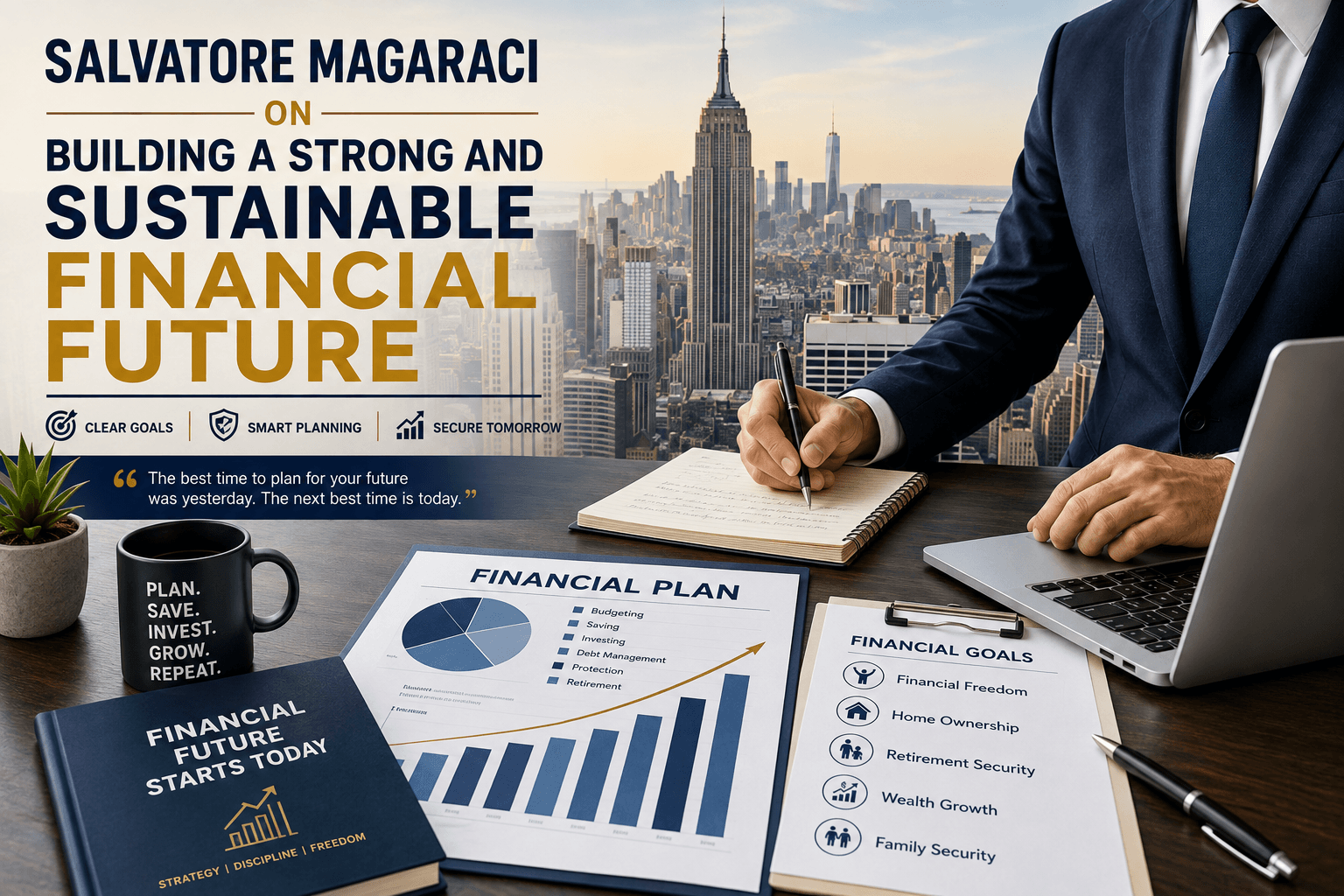
Building a strong financial future requires more than earning a good income or making occasional investments. It involves creating a practical strategy that balances today’s needs with tomorrow’s goals. For individuals and families in New York City, where living costs, housing expenses, career opportunities, and financial choices can vary considerably, having a sustainable approach to money management can make a meaningful difference.
Salvatore Magaraci highlights the importance of taking a long-term perspective when thinking about financial success. Instead of focusing exclusively on short-term gains, individuals can benefit from understanding their financial position, establishing realistic goals, managing risks, and making informed decisions that can support financial stability over time.
Start With a Clear Financial Picture
A sustainable financial future begins with understanding where you are today. Before making major financial decisions, it is useful to review income, regular expenses, savings, debt, investments, insurance coverage, and long-term obligations.
For New York City residents, this assessment can be especially important. Housing, transportation, healthcare, education, dining, and other everyday expenses can significantly influence a household’s financial priorities. Two people earning similar incomes may have completely different financial situations depending on their housing arrangements, family responsibilities, debts, and lifestyle.
Creating a complete financial overview makes it easier to identify opportunities for improvement. It can also help individuals distinguish between essential expenses, discretionary spending, and money that can potentially be directed toward savings or investments.
Set Financial Goals That Have a Purpose
A financial plan becomes more useful when it is connected to specific goals. Rather than simply trying to accumulate as much money as possible, individuals can determine what they want their money to accomplish.
Common financial goals may include:
- Building an emergency fund
- Purchasing a home
- Preparing for retirement
- Reducing high-interest debt
- Supporting children’s education
- Starting a business
- Increasing investment savings
- Creating greater financial independence
For someone living in NYC, buying property may require a different financial strategy than renting long term. Similarly, a professional planning to launch a business may need to maintain additional cash reserves compared with someone with a stable salaried position.
The goal-setting process should therefore be personal. A sustainable financial strategy should reflect an individual’s income, priorities, timeline, and tolerance for financial risk.
Develop Strong Saving Habits
Consistent saving is one of the foundations of financial stability. While the amount someone can save may change throughout their career, developing a regular saving habit can create valuable financial flexibility.
An effective strategy is to treat savings as an important part of the monthly budget rather than simply saving whatever happens to remain at the end of the month.
Automated transfers can make this process easier by moving a predetermined amount into a savings or investment account after income is received. Over time, consistent contributions can become an established part of a household’s financial routine.
For NYC residents managing significant monthly expenses, even small improvements in saving habits can contribute to greater financial resilience.
Build an Emergency Reserve
Long-term financial growth is difficult to maintain when unexpected expenses repeatedly interrupt the plan. An emergency fund can provide a financial cushion for unforeseen circumstances.
An emergency reserve may help cover expenses related to temporary unemployment, unexpected repairs, medical bills, or other financial disruptions. The appropriate amount depends on factors such as income stability, household size, employment situation, and monthly expenses.
Keeping emergency savings readily accessible is generally different from investing money intended for long-term growth. The purpose of an emergency fund is stability and accessibility rather than maximizing investment returns.
Manage Debt With a Long-Term Strategy
Debt can either support important financial objectives or create significant pressure, depending on how it is managed.
Mortgages, education loans, business financing, and other forms of borrowing may serve specific purposes. However, high-interest consumer debt can become particularly expensive when balances remain outstanding for long periods.
A sustainable financial plan should account for debt repayment alongside saving and investing. Understanding interest rates, repayment schedules, and outstanding balances can help individuals determine which obligations deserve greater attention.
Rather than viewing debt management as an isolated task, Salvatore Magaraci’s financial perspective emphasizes considering debt within the broader financial picture. The right balance between repayment, savings, and investment depends on individual circumstances.
Invest With a Long-Term Perspective
Investing can play an important role in building long-term wealth, but successful investing is rarely about predicting every market movement.
Financial markets can experience periods of growth, decline, uncertainty, and volatility. Investors who react emotionally to every market change may find it difficult to maintain a consistent strategy.
A long-term approach begins with understanding investment objectives, time horizon, risk tolerance, and diversification. Different asset classes can have different characteristics, and the appropriate mix depends on an individual’s circumstances.
For investors in New York City and elsewhere, the availability of investment opportunities can be extensive. However, having access to more choices makes financial education and careful evaluation even more important.
Investors should understand what they are investing in, why it fits their objectives, and what risks they are accepting.
Protect Wealth as Well as Building It
Financial planning should not focus exclusively on wealth accumulation. Protecting existing resources is equally important.
Unexpected events can affect income, property, businesses, and family finances. Appropriate insurance and risk-management strategies can help reduce the financial impact of certain unforeseen situations.
Depending on personal circumstances, individuals may consider areas such as health, life, disability, property, and liability protection.
Business owners may also need to evaluate risks associated with employees, contracts, property, operations, and business continuity.
A sustainable financial strategy recognizes that financial security involves both growth and protection.
Prepare for Retirement Early
Retirement planning is another major component of a strong financial future. Waiting until the final stages of a career to consider retirement can make the process more challenging.
Starting earlier gives individuals more time to contribute to retirement accounts and potentially benefit from long-term investment growth.
Retirement planning should consider expected living expenses, current savings, potential sources of retirement income, investment strategy, healthcare costs, and desired lifestyle.
For NYC professionals, future housing decisions may also be important. Someone planning to remain in New York City during retirement may need to account for different expenses than someone who expects to relocate.
Regularly reviewing retirement assumptions can help keep the strategy aligned with changing circumstances.
Consider the Impact of Taxes
Taxes can influence many financial decisions, including investing, property ownership, retirement planning, and business activities.
New York residents may face federal, state, and local tax considerations depending on their circumstances. Understanding how taxes may affect financial decisions can help individuals make more informed choices.
Tax rules can be complex and change over time, so significant tax-related decisions should be reviewed with an appropriately qualified tax professional.
Use Financial Technology Carefully
Technology has transformed personal financial management. Budgeting applications, online banking, investment platforms, digital payment systems, and financial tracking tools can make it easier to monitor money.
However, convenience should not replace understanding.
Technology can provide useful information and automation, but individuals still need to evaluate whether their financial decisions are appropriate for their objectives. Automated investing, for example, does not eliminate investment risk.
The most effective use of financial technology combines convenience with informed decision-making.
Review the Strategy Regularly
A financial plan should evolve as life changes.
A new job, marriage, home purchase, business opportunity, family responsibility, inheritance, or approaching retirement can all change financial priorities. Investment markets and economic conditions can also affect the assumptions behind an existing strategy.
For this reason, reviewing a financial plan periodically can help identify areas that need adjustment.
The objective is not to change the strategy every time circumstances fluctuate. Instead, regular reviews can help determine whether the overall plan remains appropriate.
Building Financial Confidence Through Education
One of the strongest foundations for financial independence is knowledge.
Understanding concepts such as budgeting, compound growth, diversification, inflation, interest rates, taxes, retirement planning, and investment risk can help people participate more effectively in financial decisions.
Salvatore Magaraci emphasizes the value of informed decision-making as individuals work toward long-term financial goals. Financial education does not mean becoming an expert in every investment or tax rule. It means developing enough knowledge to understand available choices, ask meaningful questions, and recognize potential risks.
Final Thoughts
Building a strong and sustainable financial future is a gradual process. It requires discipline, realistic goals, thoughtful planning, and the willingness to adapt when circumstances change.
For people living and working in New York City, financial planning may involve navigating substantial living expenses alongside opportunities for career growth, entrepreneurship, property ownership, and investing.
As Salvatore Magaraci NYC explains, sustainable financial success is not simply about how much money a person earns. It is about how effectively that money is managed, protected, and directed toward meaningful long-term objectives.
By developing strong saving habits, managing debt, investing thoughtfully, preparing for retirement, considering financial risks, and continuously improving financial knowledge, individuals can build a stronger foundation for the future.
The journey toward financial security does not require perfect decisions at every stage. What matters is creating a practical strategy, staying consistent, and making informed adjustments as life evolves.


